


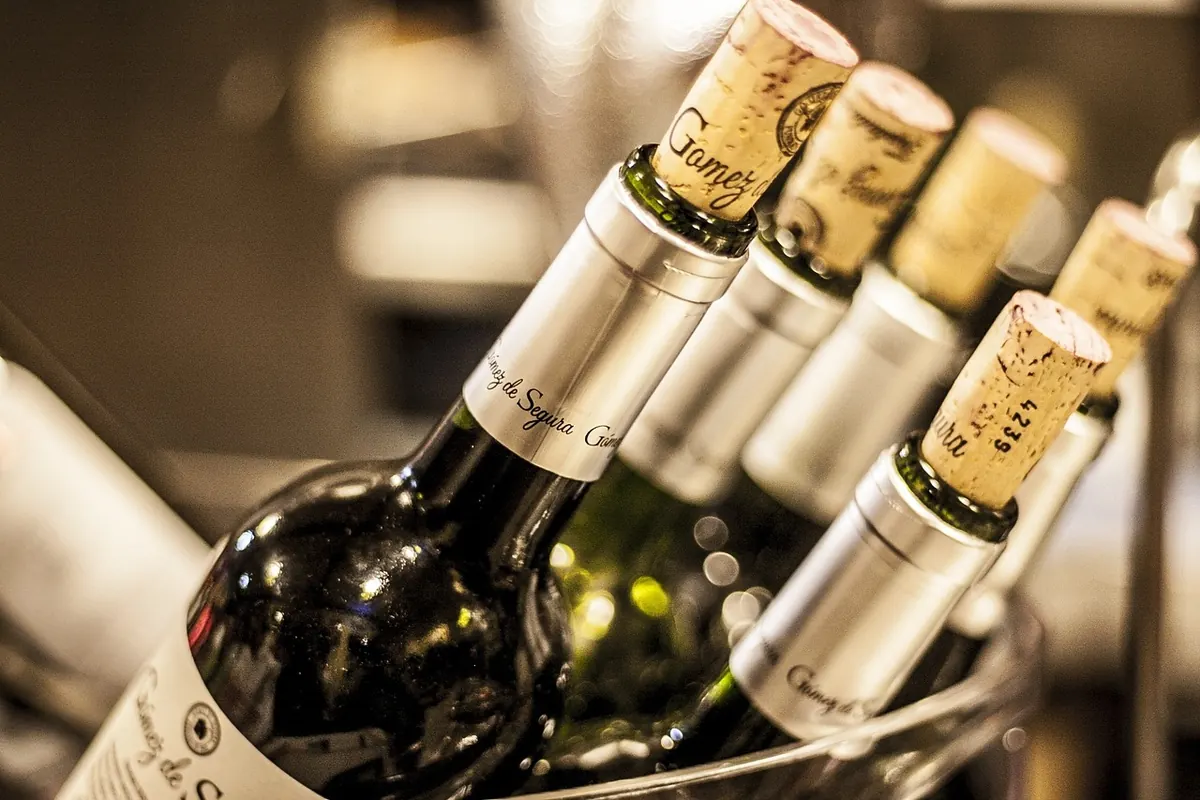
Two golden bottles, the same slow method behind them, and a host in a wine shop trying to decide. English sparkling wine has grown up fast: from the chalk downland of Sussex, Hampshire and Kent come wines that can hold their own against Champagne at a similar price. Champagne still brings centuries of blending skill and a name that does quiet work at a table.
So which do you open for a wedding, a milestone birthday or a wet Bank Holiday barbecue? It depends on what you want the wine to do. Here is how the two compare where it matters.
Same Method, Different Address
Both wines are made the traditional way: a base wine is bottled, dosed with sugar and yeast, sealed, and left for a second fermentation to trap bubbles inside the bottle itself. The wine then sits on its spent yeast cells — the lees — before being riddled, disgorged and topped up with dosage. The difference is not the technique. It is the postcode.
Champagne has been a protected designation since 1936, drawn around a specific patch of northern France with its own soils, slopes and villages. England has no equivalent appellation yet, which means the words "English sparkling wine" lean on reputation rather than law. In practice, that means the best English producers are competing on quality alone, and the worst can hide behind the same label. Champagne's rules guarantee a baseline; England's best producers simply choose to exceed it.
The geology is the neatest twist in the story. The chalk beneath the South Downs and parts of Hampshire and Kent belongs to the same band of chalk that runs under the Channel and surfaces in the Champagne region. Same rock, different weather. England's is cooler, wetter and windier, and the resulting grapes ripen more slowly, keeping sharper acidity and lower alcohol. That single difference explains most of what you taste in the glass.
What the rules do and don't require
- Champagne non-vintage must spend at least 15 months in the bottle, 12 of them on the lees.
- Champagne vintage must spend at least three years in the bottle before release.
- English sparkling wine has no minimum ageing rule, so lees time is a producer's choice — anything from 12 months to six years or more.
- Both rely on Chardonnay, Pinot Noir and Meunier, though English vineyards often add Pinot Blanc, Pinot Gris or Seyval Blanc.
- English producers use the phrase "Traditional Method" because "Méthode Champenoise" is legally reserved for Champagne.
What the Wine Actually Tastes Like
English sparkling wine
Think green apple, lemon peel, white blossom and a fine, needle-like bead. Cool-climate acidity gives the wine a taut, saline edge that makes it dangerously drinkable. Extended lees ageing — and top English producers are generous with it — adds brioche, toasted almond and a creamy mid-palate to balance that bite. Because most English estates are small and release vintage-dated wines, you taste the year: a warm 2018 or 2020 will feel rounder and more generous than a leaner, racier vintage.
Names worth knowing on a restaurant list include Nyetimber, Gusbourne, Ridgeview, Chapel Down, Wiston Estate, Rathfinny and Sugrue Pierre. Styles range from crisp Blanc de Blancs to richer Blanc de Noirs and pale, savoury rosés.
Champagne
Champagne's advantage is library depth. A large house may hold reserve wines going back a decade or more, blended to keep a house style consistent year after year. That is why a non-vintage bottle of Bollinger or Pol Roger tastes much the same in 2024 as it did in 2014. The flavour profile leans towards brioche, hazelnut, baked apple, lemon curd and a chalky, savoury finish, often with a slightly softer mousse than its English counterpart.
Grower Champagne — small estates bottling their own grapes, marked "RM" on the label — is the closest analogue to the English model, and often the most interesting comparison. Producers such as Pierre Péters or Egly-Ouriet sell terroir rather than brand.
If English sparkling wine is a sharp, bright photograph of a single year, non-vintage Champagne is a carefully retouched portrait of a house style. Neither is better. They are simply doing different jobs.
Price and Value: Where the Money Goes
This is where the decision usually gets made. Expect to pay roughly £25–£45 for a good English sparkling wine, and £45–£80 for a top prestige cuvée. Entry-level non-vintage Champagne starts around £30–£40 and climbs steeply; a vintage or prestige bottling from a famous house can easily pass £100.
The economics are not mysterious. English vineyards are young, land is expensive, yields are lower, harvests are done by hand because the slopes and small plots demand it, and there are no vast reserve stocks to blend with. Champagne houses spread their costs across millions of bottles. At £35, you are often getting a more ambitious, hand-made wine from England and a competent, consistent wine from France. At £75, English prestige bottlings can genuinely match vintage Champagne — but they lose the instant recognition that comes with a famous label.
Matching the Bottle to the Occasion
Weddings and toasts
A toast is as much theatre as it is flavour. Champagne does quiet work here: nobody has to explain it, and the name carries the occasion. If you are marrying in a Sussex barn or a Kentish oast house, however, English sparkling wine earns its place twice over — it tells a story about the place, and guests almost always ask about it. A safe compromise: Champagne for the toast, English sparkling poured through dinner.
Milestone birthdays and anniversaries
For a 40th, 50th or golden anniversary, buy age rather than brand. A vintage Champagne from the year in question, or a late-disgorged English cuvée aged five years on the lees, will feel considered. Both reward a slow pour and a real glass.
Wet Bank Holiday barbecues and garden parties
This is English sparkling wine's home turf. Its high acidity cuts through salt, fat and smoke: fried chicken, sausages, crisps, oysters, salt-baked potatoes. Champagne works too, but a £40 English bottle you can open without wincing is the more sensible party guest. Serve it cold and keep pouring.
How to Serve, Store and Open Both Properly
- Chill it well. 8–10°C for non-vintage, 10–12°C for vintage or heavily aged bottles. Twenty minutes in an ice bucket of water and ice beats two hours in the fridge.
- Skip the flute. A tulip-shaped glass or an ordinary white wine glass shows far more aroma. Flutes look festive and smell of almost nothing.
- Open it quietly. Hold the cork, twist the bottle, keep the pressure pointed away from faces and windows. A gentle sigh beats a bang.
- Pour down the side. Tilt the glass and pour slowly to preserve the mousse rather than flattening it.
- Store upright and dark. Sparkling wine keeps fine standing up; the cork faces less contact and stays springy. Keep it cool and away from vibration.
A Five-Minute Buying Checklist
- Read the back label. Lees ageing, dosage level and disgorgement date are the three most useful numbers. Longer lees ageing means more texture.
- Look for "Traditional Method". Anything labelled "Charmat" or "Cuve Close" is tank-fermented and a different, simpler drink.
- Check the dosage. Extra Brut and Brut Nature suit English acidity; Demi-Sec belongs on dessert.
- Prefer a named vintage if you want character, and a non-vintage blend if you want consistency.
- Buy from a specialist who can tell you the disgorgement date. Freshly disgorged bottles can taste tight for a few months.
The Short Answer
Choose Champagne when the name matters — the toast, the gift, the table where someone will inevitably say "oh, it's the real thing". Choose English sparkling wine when the occasion is local, the food is salty and fried, or you simply want the better bottle for the money. Both are made the same way, both deserve a proper glass, and neither will let a British celebration down.
Photo: Maria Orlova / Pexels